
Floor Scrubber for Food Processing Plants (2026)
Food-grade floor scrubbers for meat, dairy, bakery, and beverage plants. Stainless steel components, wash-down capable, HACCP-compliant cleaning.
In This Guide
Why Food Processing Floors Demand Specialized Equipment
Food processing facilities face the toughest floor cleaning challenge: they must remove grease, oils, food particles, and bio-contaminants while meeting HACCP, FDA, and USDA sanitation standards. A standard commercial scrubber won't survive the combination of aggressive chemicals, high-temperature wash-downs, and 24/7 operation. You need a machine built specifically for food-grade environments.
5 Non-Negotiable Features for Food Plant Scrubbers
If your scrubber lacks any of these, it's not food-grade:
- Stainless steel components: Brushes, tanks, and frame must resist corrosion from acid-based cleaners and sanitizers. Standard steel rusts within months.
- IP65+ water protection: Electrical components sealed against high-pressure wash-down. IP65 minimum; IP67 preferred for areas with standing water.
- Oil-resistant squeegee rubber: Standard rubber degrades from animal fats and vegetable oils. Oil-resistant Linatex or polyurethane is mandatory.
- Smooth, crevice-free design: No seams or joints where bacteria can harbor. All surfaces must be cleanable with sanitizing solution.
- Food-grade hoses and gaskets: NSF-certified or FDA-compliant materials that won't leach chemicals into wash water.
Best Scrubber Type by Food Processing Sector
Different food sectors have different primary challenges:
- Meat & Poultry: High-pressure wash-down essential. Oil-resistant everything. Stainless steel non-negotiable. Floor temperature may reach 40°C+ during sanitation.
- Dairy & Beverage: Frequent cleaning cycles (every 2-4 hours). Fast-drying squeegee critical. Acid-resistant components for milk-based soils. Compact for tight spaces between tanks.
- Bakery & Snack Foods: Dry debris (flour, sugar) before wet cleaning. Sweeper-scrubber combo ideal. Explosion-proof motors for flour dust environments.
- Seafood: Extreme corrosion resistance. Saltwater-rated components. Extra drainage capacity. Clean-after-every-shift schedule.
- Produce & Cold Storage: Operate at 2-8°C. Lithium battery essential (lead-acid fails below 5°C). Condensation-resistant electronics.
HACCP Compliance: How Your Scrubber Fits Into Food Safety
Your floor scrubber is a critical control point in your HACCP plan. The machine itself must not become a contamination vector. Key requirements:
- Color-coded brushes: Different colors for raw vs. cooked areas to prevent cross-contamination
- Documented cleaning logs: Record when each area was cleaned, with what machine, and which operator
- Sanitizer-compatible: Machine must accept quaternary ammonium, peracetic acid, and chlorine-based sanitizers without degradation
- Drainage management: Recovery tank must empty directly to floor drains — no cross-contamination from dumping stations
Walk-Behind vs Ride-On for Food Plants
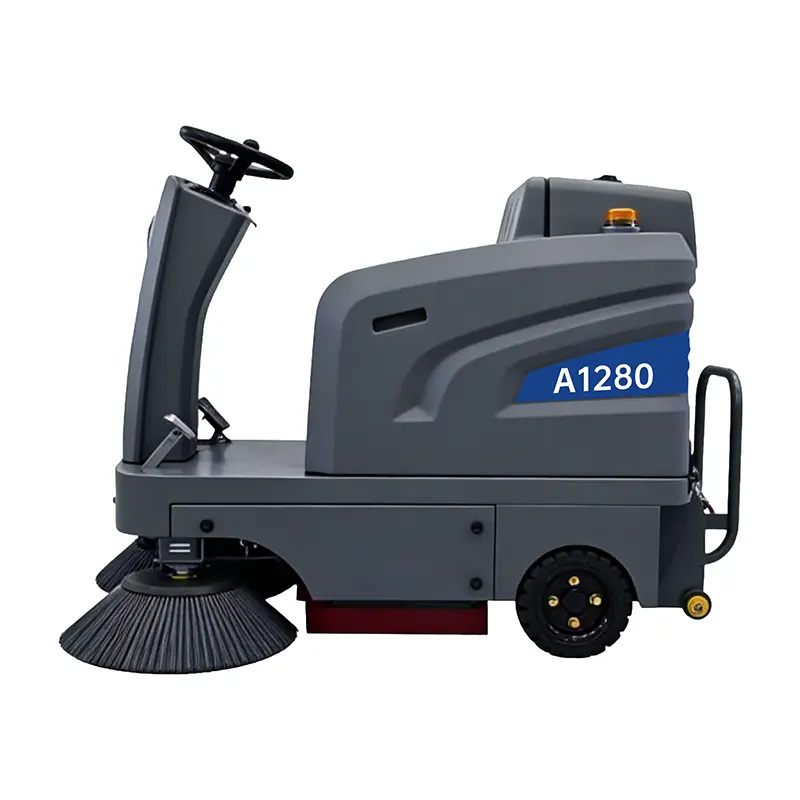
Food plants are typically medium-sized (10,000-40,000 sq ft) with complex layouts — production lines, narrow passages between equipment, cold rooms, and loading docks. Walk-behind scrubbers (20-28 inch) are usually the better choice for maneuverability. Ride-on machines work well for large open areas like warehouse and packaging zones, but can't navigate production floor obstacles.
Get Your Food Plant Scrubber Quote
Tell us your food sector, floor area, and sanitation schedule. We'll recommend a food-grade machine with proper certifications. Factory-direct pricing — no dealer markup.
Related Guides
Browse Machines by Type
Ready to Get Factory-Direct Pricing?
Get a quote within 24 hours. No middlemen — buy direct from the manufacturer and save 30-50%.
About the Author
Mark Wang is Sales Director at Aikerui with 15+ years of experience in industrial floor cleaning equipment. He has helped 2,000+ facilities across 50+ countries source factory-direct cleaning equipment.
About Aikerui
Aikerui is an industrial cleaning equipment manufacturer founded in 2008, operating its own 10,000+ square meter production facility in Anqing, Anhui, China. It manufactures floor scrubbers, sweepers and replacement parts, holds CE and ISO 9001 certification, and exports to 50+ countries. Every guide on this site is written by the manufacturer's own team — not a third-party agency.