
Choosing the Right Floor Scrubber for You
Discover the ideal floor scrubber for your facility: compact, walk-behind, ride-on and sweeper-scrubber types compared by space, floor type, features and cost.
In This Guide
- Which Floor Scrubber Fits Your Space and Cleaning Routine?
- The Main Types of Floor Scrubbers
- Compact Scrubbers for Small or Crowded Areas
- Walk-Behind Scrubbers for Everyday Commercial Cleaning
- Ride-On Scrubbers for Large Facilities
- Sweeper-Scrubbers for Debris and Heavy Soil
- Floor Type Should Shape Your Machine Choice
- Which Features Affect Productivity and Cost the Most?
- A Practical Decision Checklist
- Budget, Value, and Long-Term Ownership
- Maintenance Keeps Performance Consistent
- Smart Technology and Sustainability Features
- The Best Choice Is the One Your Team Will Use Well
Which Floor Scrubber Fits Your Space and Cleaning Routine?
The right floor scrubber turns hard-floor cleaning from a slow, inconsistent chore into a repeatable process with cleaner results and less operator strain. Whether you manage a retail store, school, warehouse, clinic, or manufacturing space, the best choice depends on your square footage, floor surface, soil level, cleaning schedule, and budget.
The best floor scrubber is the one that matches the way your facility is actually used. A compact area with tight aisles needs a different scrubber machine than a wide-open warehouse, and a lightly trafficked lobby does not need the same cleaning power as a production floor with dust, oil, or heavy debris.
Start with three basics: how much floor you clean, how often you clean it, and what kind of soil you need to remove. If your team cleans less than 10,000 square feet at a time, a compact or small walk-behind floor scrubber machine may be enough. For 10,000 to 25,000 square feet, a larger walk-behind, stand-on, or mid-size commercial floor scrubber can improve productivity without taking up too much storage space. For spaces above 25,000 square feet, ride-on floor scrubbers usually make more sense because they reduce fatigue and cover more ground per shift.
Also think about the people using the machine. If cleaning is handled by multiple staff members, simple controls, easy tank access, and clear maintenance steps matter. A powerful floor cleaning machine is only useful if operators can run it safely, empty it easily, and keep it ready for the next shift.
The Main Types of Floor Scrubbers
Not every floor machine is built for the same job. Understanding the major categories helps you narrow the field before comparing detailed specifications.
| Type | Typical use | Main trade-off |
|---|---|---|
| Compact scrubber | Small shops, restrooms, classrooms and narrow corridors | Smaller tanks mean more refilling and emptying |
| Walk-behind scrubber | Offices, schools, grocery stores, gyms and healthcare corridors | The operator walks behind, so long routes become tiring |
| Ride-on scrubber | Warehouses, distribution centres, airports and big-box retail | Needs turning space, storage and operator training |
| Sweeper-scrubber | Dusty, debris-heavy warehouses and production floors | Higher cost and larger footprint than a scrubber alone |
Compact Scrubbers for Small or Crowded Areas
Compact floor scrubbers are designed for tight spaces such as small shops, restrooms, café seating areas, classrooms, and narrow corridors. They are easier to maneuver than larger machines and can often clean closer to edges, fixtures, and displays. They usually have smaller solution and recovery tanks, so they may require more frequent refilling and emptying during longer cleaning sessions.
Choose a compact model when storage space is limited, traffic patterns are tight, or your alternative is manual mopping. In many smaller facilities, a compact floor scrubber provides a strong step up in consistency because it applies solution, agitates the floor, and recovers dirty water in one pass.
Walk-Behind Scrubbers for Everyday Commercial Cleaning
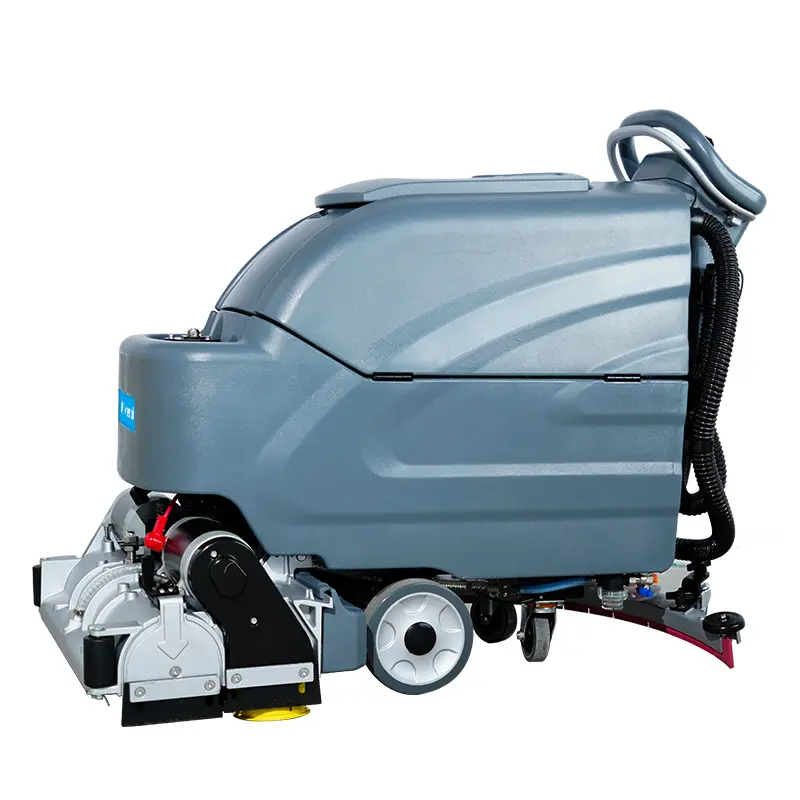
Walk-behind machines are a common choice for offices, schools, grocery stores, gyms, healthcare corridors, and medium-size facilities. They balance productivity with control, giving operators enough capacity and cleaning width for regular use while still being manageable around obstacles.
A walk-behind commercial floor scrubber is especially useful where layouts change, aisles are narrow, or operators need to move between rooms. The tradeoff is that the operator still walks behind the unit, so long cleaning routes can become tiring. For daily cleaning of moderate spaces, though, walk-behind floor scrubbers often hit the best balance of cost, size, and performance.
Ride-On Scrubbers for Large Facilities
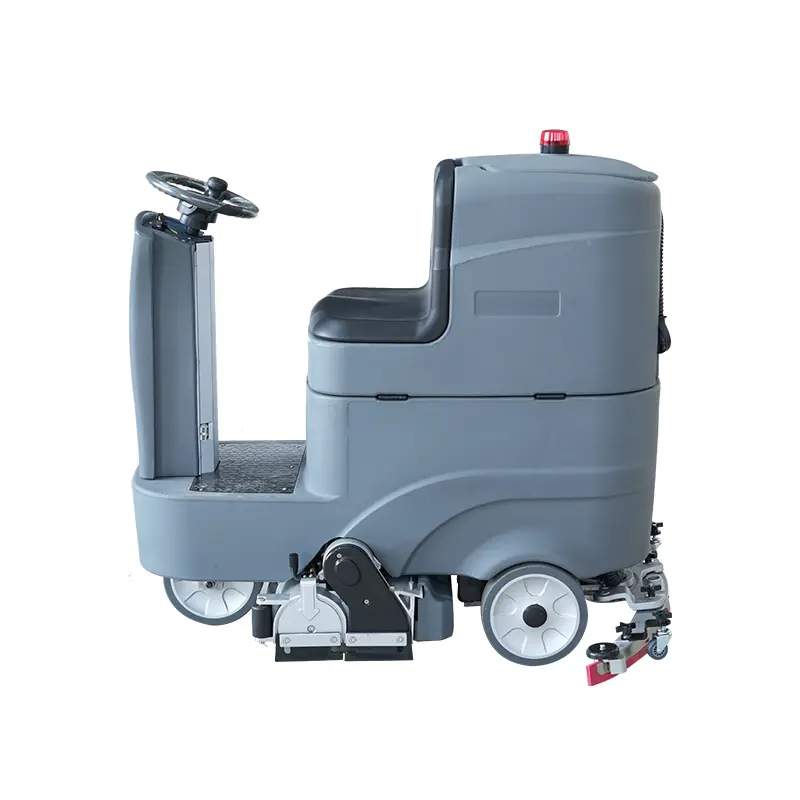
Ride-on models are built for wide areas and longer routes. They are common in warehouses, distribution centers, airports, big-box retail, manufacturing plants, and large schools. Because the operator rides instead of walks, these machines can reduce fatigue and help teams clean more consistently over longer shifts.
A ride-on industrial floor scrubber typically offers a wider cleaning path and larger tanks than smaller models. That means fewer stops to refill solution or empty recovery water. The main considerations are turning radius, storage space, operator training, and whether the machine can safely navigate your facility's aisles, ramps, doorways, and traffic zones.
Sweeper-Scrubbers for Debris and Heavy Soil
If your facility deals with dust, packaging debris, grit, or production residue, a sweeper-scrubber may be worth considering. These machines combine dry debris collection with wet scrubbing, which can reduce the need for separate sweeping before washing the floor.
They are especially useful in warehouses and industrial environments where loose debris would otherwise clog squeegees, reduce cleaning quality, or slow the job. If your team currently sweeps first and scrubs second, a combination floor cleaning machine may save time and improve workflow.
Floor Type Should Shape Your Machine Choice
Floor scrubbers can be used on many sealed hard floors, including sealed concrete, epoxy, tile, terrazzo, stone, and vinyl. The key word is sealed. Unsealed, damaged, or moisture-sensitive floors may require a different approach, so check the floor condition and manufacturer guidance before choosing aggressive settings or brushes.
The brush or pad system matters as much as the machine itself. Cylindrical brushes can work well where debris is present or grout lines need agitation. Disc brushes and pads are common for smooth commercial floors and routine maintenance. Orbital systems can be helpful for detailed agitation and lower-water cleaning in certain applications, depending on the model and floor surface.
Pressure control is another important feature. A delicate vinyl floor may need lighter pressure and the right pad to prevent damage, while a textured industrial floor may need stronger agitation. Adjustable pressure gives you more flexibility, especially in buildings with multiple floor types.
Use this quick matching guide as a starting point:
- Retail floors: prioritize maneuverability, quiet operation, good water recovery, and a polished appearance after cleaning.
- Schools and gyms: look for easy controls, safe recovery, pad options, and the ability to handle daily traffic.
- Healthcare corridors: focus on consistent cleaning, low noise, simple sanitation routines, and dependable uptime.
- Warehouses: consider ride-on or sweeper-scrubber models with larger tanks and strong debris handling.
- Manufacturing areas: choose durable equipment, stronger agitation, and features that handle heavier soil without excessive downtime.
Which Features Affect Productivity and Cost the Most?
The features that affect daily productivity most are cleaning path width, tank capacity, power source, brush system, squeegee performance, and ease of maintenance. A wider machine may clean faster in open areas, but it can slow operators down if it cannot turn comfortably or fit through key spaces.
Cleaning path width should match your layout. A large industrial floor scrubber with a wide deck is efficient in open warehouse aisles, but it may be frustrating in a store with displays, tight corners, and frequent obstacles. On the other hand, a machine that is too small for a large building can force operators to spend more hours cleaning and make it harder to keep floors on schedule.
Tank size also affects labor. Larger solution and recovery tanks mean longer cleaning runs between stops. However, bigger tanks add machine size and weight, so the right balance depends on your route, storage area, drains, and refill points.
Battery type is another major decision. Corded machines can work for some predictable routes, but cords limit range and introduce trip-management concerns. Battery-powered floor scrubbing machines give operators more freedom. Traditional lead-acid batteries can be cost-effective, but they are heavier and require more care. Lithium-ion batteries are often valued for faster charging, opportunity charging, longer usable runtime, and lower maintenance, though exact performance depends on the model.
Do not overlook the squeegee system. A floor scrubber machine should leave the floor clean and dry enough for safe use soon after cleaning. Poor recovery can create streaks, slippery areas, and rework. Check how easy the squeegee is to remove, clean, adjust, and replace. See our squeegee blade guide at https://aikeruiclean.com/guides/top-10-floor-scrubber-squeegee-blades for replacement options.
A Practical Decision Checklist
Before choosing a floor scrubber, walk your facility with the cleaning route in mind. Specifications are useful, but the right answer becomes clearer when you connect them to real conditions.
Use this checklist before you compare models:
- Measure the cleaning area. Estimate the square footage cleaned per shift, not just the total building size.
- Map the route. Note door widths, elevators, ramps, tight turns, floor drains, refill stations, and storage space.
- Identify the floor surfaces. Confirm whether floors are sealed and whether they need special pads, brushes, or pressure settings.
- Rate the soil level. Light dust, food spills, salt, oil, grit, and industrial residue all call for different cleaning strength.
- Set the cleaning frequency. Daily cleaning may justify more capacity and comfort features than occasional deep cleaning.
- Consider operator experience. Simple controls and ergonomic design can reduce mistakes and improve consistency.
- Plan maintenance. Make sure your team can rinse tanks, clean squeegees, check pads, inspect filters, and manage batteries.
- Compare total value. Look beyond purchase price to labor time, uptime, consumables, maintenance, and expected use.
Budget, Value, and Long-Term Ownership
Budget matters, but the cheapest floor scrubber is not always the lowest-cost choice over time. Labor is often the biggest cleaning expense, so a machine that helps one operator clean more consistently may deliver value beyond the initial purchase. The goal is not to buy the biggest or most advanced model; it is to buy the machine that supports your cleaning standard with the least wasted time and rework.
New machines may offer the latest battery options, ergonomic controls, water-saving systems, and easier service access. Refurbished machines can be a smart option when budget is tight, especially for facilities with straightforward cleaning needs. The tradeoff is that older equipment may not include newer technology, may have shorter remaining component life, or may require closer inspection before purchase.
Factory-direct pricing, dealer support, warranties, parts availability, and service access can all influence value. If you are comparing two similar floor scrubbers, ask practical questions: How quickly can parts be sourced? Who handles service? Are brushes, pads, squeegees, and batteries easy to replace? A great deal loses its appeal if downtime keeps the machine parked when floors need attention.
Maintenance Keeps Performance Consistent
A floor scrubber performs best when basic care becomes part of the cleaning routine. Daily maintenance is not complicated, but skipping it can lead to odors, streaking, weak suction, reduced runtime, or premature wear.
After use, operators should empty and rinse the recovery tank, rinse the solution tank when appropriate, clean the squeegee assembly, remove debris from brushes or pads, and leave tanks open to dry when possible. Pads should be checked for wear and replaced before they stop cleaning effectively. Squeegee blades should be wiped down and inspected because small cuts or buildup can leave water trails.
Periodic maintenance should include checking filters, hoses, seals, battery condition, charger connections, brush wear, and wheel condition. For battery-powered machines, follow the battery manufacturer's care instructions. Lead-acid batteries may require watering and careful charging practices, while lithium-ion systems usually reduce routine battery maintenance. Our floor scrubber maintenance checklist covers the full schedule: https://aikeruiclean.com/guides/floor-scrubber-maintenance-checklist
Smart Technology and Sustainability Features
Modern floor scrubbers may include features designed to reduce water, chemical use, and operator guesswork. Depending on the model, systems such as EcoFlex, REV orbital technology, SmartFlow, or similar controls can help adjust solution flow, increase agitation efficiency, or support lower-chemical cleaning routines.
These features are most valuable when they match your facility's goals. A school may prioritize lower chemical exposure and quiet operation. A retailer may care about quick drying and consistent appearance during business hours. A warehouse may value water control because large areas can waste solution quickly if flow is not managed well.
Sustainability is not only about using less water or chemical. It also includes choosing equipment that operators can maintain, parts that can be replaced, and settings that prevent overuse. A well-matched scrubber machine supports cleaner floors with fewer wasted resources.
The Best Choice Is the One Your Team Will Use Well
Choosing between floor scrubbers is less about finding a universal best machine and more about finding the right fit for your building, staff, and cleaning standard. Match the machine to your square footage, floor type, soil level, route, and maintenance capacity, then compare the features that directly affect daily productivity.
If you are replacing mops, upgrading an older floor cleaning machine, or selecting your first commercial floor scrubber, start with the real work your team does every day, then compare the specifications that matter: capacity, cleaning path, power source, brush system, recovery performance, support, and long-term value.
Browse Aikerui's commercial floor scrubber range at https://aikeruiclean.com/floor-scrubbers, compare walk-behind and ride-on models in our guide at https://aikeruiclean.com/guides/walk-behind-vs-ride-on-scrubber, or send your floor area, floor type and cleaning schedule for a factory-direct quote at https://aikeruiclean.com/industrial-floor-scrubber-quote.
Related Guides
Browse Machines by Type
Ready to Get Factory-Direct Pricing?
Get a quote within 24 hours. No middlemen — buy direct from the manufacturer and save 30-50%.
About the Author
Mark Wang is Sales Director at Aikerui with 15+ years of experience in industrial floor cleaning equipment. He has helped 2,000+ facilities across 50+ countries source factory-direct cleaning equipment.
About Aikerui
Aikerui is an industrial cleaning equipment manufacturer founded in 2008, operating its own 10,000+ square meter production facility in Anqing, Anhui, China. It manufactures floor scrubbers, sweepers and replacement parts, holds CE and ISO 9001 certification, and exports to 50+ countries. Every guide on this site is written by the manufacturer's own team — not a third-party agency.